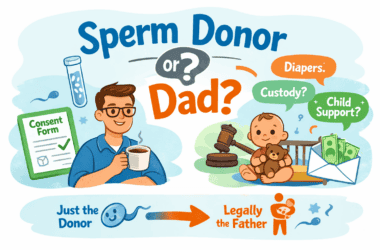

Iowa Court Allows Paternity Fraud Action
How Paternity Fraud is Changing Family Law in Minnesota
When a man discovers he has been financially supporting a child who isn’t biologically his, the emotional and financial fallout is devastating. Trust me, I’ve seen it firsthand more than once. In my 26 years of practicing family law across Southern Minnesota, I’ve seen how quickly these disputes tear families apart.
Paternity fraud happens when a mother intentionally leads a man to believe he is the father of her child, fully knowing he is not. There is a debate about the intentional issue here and how do you prove that? More on that below.
The law in this area is evolving, and some rulings in neighboring states (Iowa) are setting important precedents that are drifting over towards Minnesota. If you are facing questions about biological fatherhood, understanding your legal rights is critical.
Can You Sue for Paternity Fraud?
Yes, under certain circumstances, courts are beginning to allow these lawsuits to proceed. The Iowa Supreme Court’s landmark decision in Dier v. Peters (815 N.W.2d 1) established that a man could sue his former girlfriend for common law fraud.
In this case, the man voluntarily provided financial support for the child, acting like a father based on the mother’s intentional misrepresentation. When a custody dispute prompted genetic testing, he learned the three-year-old child was not actually his. Surprise!
The court ended up holding that allowing a civil suit to recover voluntarily paid support serves a critical public policy interest: deterring intentional deception and fraud.
Now, keep in mind this is in Iowa, and they do things differently down in Corn Country.
Does Court-Ordered Child Support Change Things?
It does quite a bit. How you paid support dramatically affects your legal options moving forward. The reason is that if you are ordered to pay child support, this means a court has determined that you are the dad, and that means you have very strict timelines in Minnesota once this occurs.
However, If you voluntarily pay child support based on a lie, you have a much stronger argument for a civil fraud claim. We see this more frequently when a couple live together (when you’re not married, remember that is key as well) and after a number years they seperate, but still on good terms and the father just makes a payment to the mother.
What Are the Risks to the Child?
Well, it’s still to be decided in Minnesota, but other courts heavily weigh the emotional impact on the child before allowing a lawsuit to move forward. The older the child, the harder it is to disestablish paternity.
- Age matters: In the Iowa case, the child was only three, leading the court to believe the emotional damage would be limited.
- The teenage years: Conversely, in the Nebraska case Day v. Heller, the court blocked a lawsuit involving a 15-year-old child, ruling that destroying a lifelong parent-child bond was against public policy and is not going to be allowed.
- Best interests standard: Family courts prioritize the child’s well-being above the financial grievances of the adults involved.
How Does This Affect Minnesota Law?
Minnesota courts have opened the door to these types of claims, but they remain highly complex to navigate.
In the 1999 case G.A.W. v. D.M.W., the Minnesota Court of Appeals recognized that there is no absolute legal barrier preventing a person from bringing fraud or misrepresentation claims against a mother regarding paternity.
While we haven’t seen a flood of Minnesota cases since then, the Iowa Supreme Court’s ruling provides a strong, persuasive blueprint for future claims in our state. Having neighboring jurisdictions recognize paternity fraud strengthens the argument for defrauded men who thought they were Dads, in Minnesota courtrooms.
Next Steps to Protect Your Rights
If you suspect you are the victim of paternity fraud, do not ignore the issue or stop court-ordered payments without legal guidance. Taking matters into your own hands can result in severe legal penalties, including contempt of court.
- Request a legal DNA test: At-home kits are rarely admissible in court; it might be a good place to start if you suspect it, but it won’t end the case by itself.
- Gather documentation: Collect evidence of voluntary payments, texts, and emails.
- Act quickly: Statutes of limitations and the child’s growing age can close your window of opportunity. This is not just a ploy to get you to call a lawyer, it’s serious.
There we go, a basic little article but one that I hope you never need! Feel free to reach out with question if you have any!